Reflections on “Advancing Research Capacity”
What did this ARC Residency mean to you and your practice?
I encountered the ARC Residency when I was having this growing intrigue towards live projections and I really appreciated the opportunity to test things in real light and colours in space. It was helpful to have access to tech and equipments and just be able to see in this scale. I feel that I now have a better understanding of what the work is morphing into, its range and flexibilities.
Describe what you did during your residency?
I used the ARC residency to begin a new iteration of an ongoing project which investigates states of heightened emotionality. During this time, I was able to discover some undertones in the project that were really interesting, that I couldn’t see clearly before.
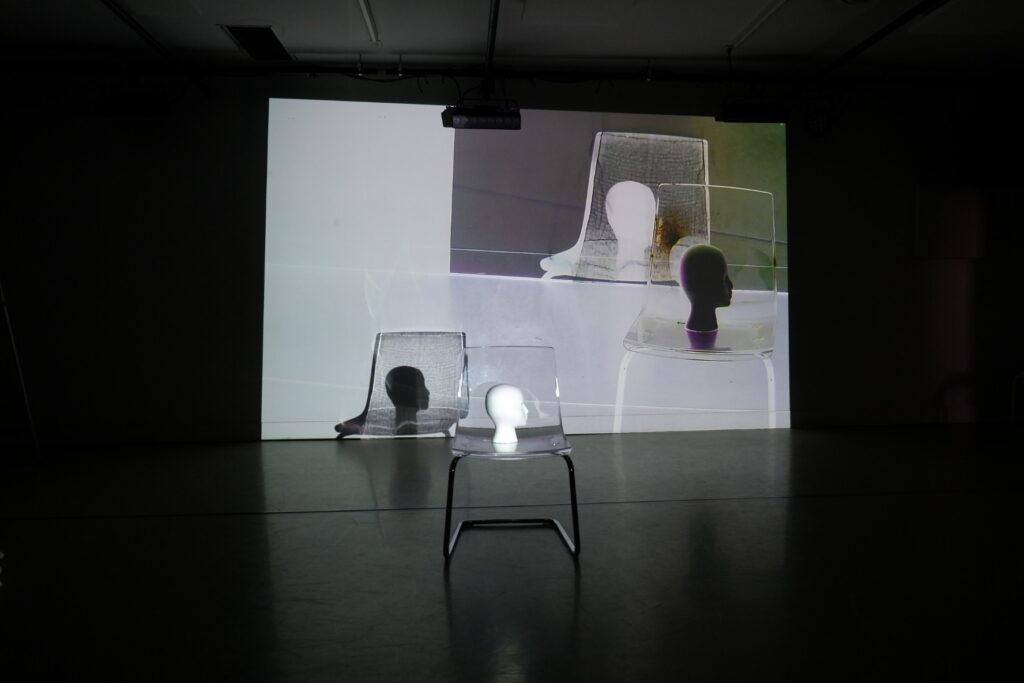
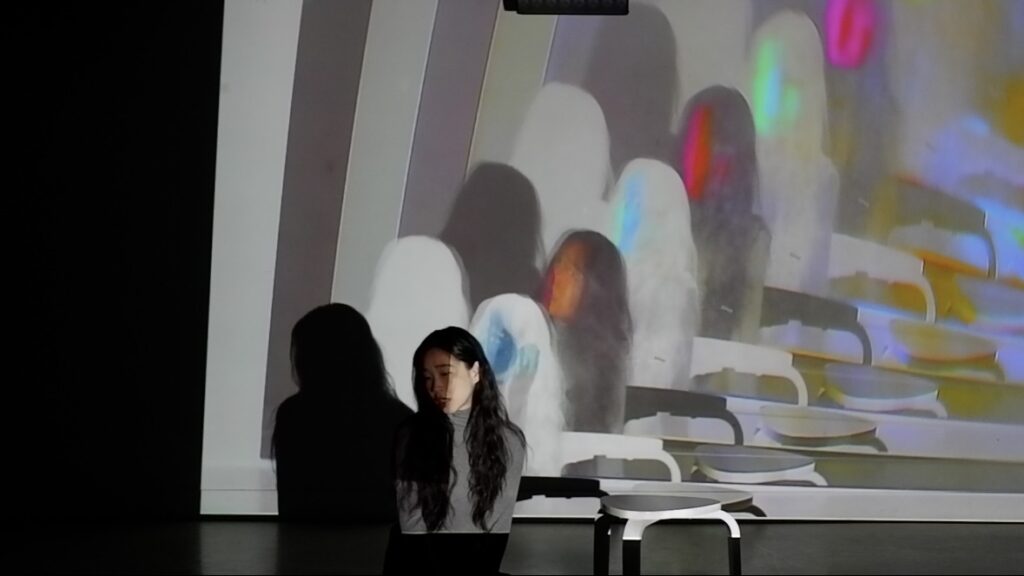
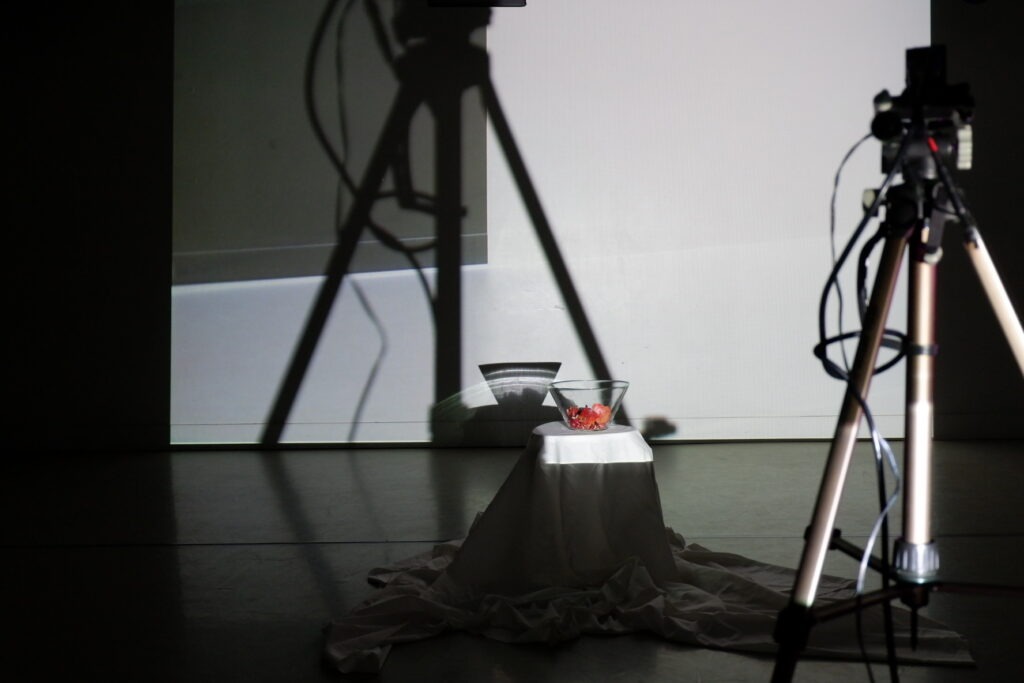
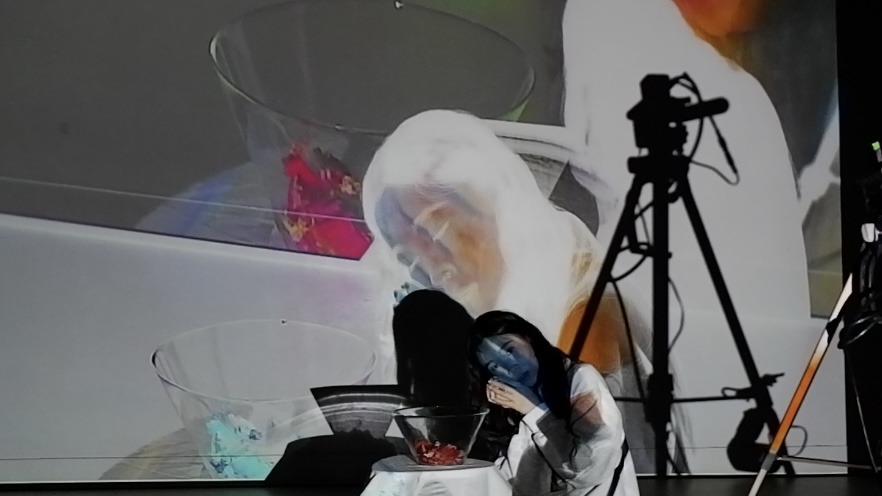
On my first day, with the help of our technician Jack, I learned to set up a live cam loop in Touchdesigner. This allowed me to then experiment with settings for each layered frame in the loop. In the delaying or recording of specific layers and camera movements I discovered ways to visualize ineffable sensations that were crucial to the piece – sensations of vertigo, suspension, dissociation, absurdity and dream. The inverse of colours in some layers created a surrealist quality, which surprisingly worked to the expansion/contraction of space rather than ambiance.
I had a bit more time on the final day so I did run-thru’s for a few segments of the piece with the setup from the previous session. I tested out different settings and the effects they had on specific gestures, texts, distances, and staging layouts. Through this, I was able to find the appropriate places to incorporate the tech and felt I had more control over the pacing of the work. For example, using a tighter, stationary cam loop without delay when working with a text derived from the DSM-5 and a Multidimensional Inventory of Dissociation report creates a sense of implosion and urgency, while a handheld cam pov with a delayed loop cycle and inverted colours can transmute the space outside into the internal world of the performer.
What is next for this work and/or practice?
In this third iteration, or “act,” in my ongoing series “3 acts of love (adj.),” I want to create a kind of synthesis of the previous acts which investigated themes of intimate confrontations as well as escapism. This is why this piece chooses to turn within and explore the kernel of this project – the psychological imprint of undergoing a state of being such as love. Shifting the light from the “acts” onto the one who acts, the “actor,” the work recognizes that there is a grammatical passiveness in every act: to act is also to be acted upon.
The actor is also a recipient of her own actions. She experiences it in the twofold, both as witness and perpetrator. Referencing Artaud’s idea that “the primary intention of every act [is] to reveal one’s own essence,” these acts of love, whether it be confrontation or escape, ultimately reflects the one who acts. In this current iteration of the work I had wished to find its potential as a site of mirroring (without the activation of olfactory senses like the previous performance), and the incorporation of tech such as live camera and projections work well as a visual solution.
Moving forward, I feel that I’m more inclined to describe my practice as world building through the amalgamation of live theatre, film, installation and literature etc. Specifically for this project, I’m interested in making a theatre-film next, which would include something of all three acts of “3 acts of love (adj.),” as an epitome of the series. I would like to keep experimenting with the intertextuality between different iterations of the project, storytelling through symbolic gestures and performance as image-making. Eventually, I would also want to explore this work as an adaptable scenario/score for multiple performers.